FeedOptimizer.AI or Feedonomics: which one fits a small business?
Feedonomics is a managed-service provider built for enterprise feeds across 2,000+ channels, recently joined by Feedonomics Surface, a self-serve tier priced for smaller catalogs. FeedOptimizer.AI is an AI-first tool built for exactly one channel, Google Shopping. If you want a dedicated feed manager, A/B testing across hundreds of channels, and the budget to match, the Feedonomics managed service is the right call. If you run a single Google feed and want AI-written titles instead of mapping rules, FeedOptimizer.AI gets you there faster.
Feedonomics has been part of BigCommerce since 2021 (the parent company has traded as Commerce.com, Inc. since summer 2025, the umbrella brand for BigCommerce, Feedonomics, and Makeswift) and has always positioned itself as a full-service platform for complex, multi-channel catalogs. Until recently, that meant a small merchant had two options: build the rules yourself, or pay for a dedicated feed manager you don't need at 3,000 SKUs on a single channel. Feedonomics Surface adds a third option, a publicly priced self-serve product. That changes the comparison, but it doesn't resolve the underlying question: do you want to maintain rules, or do you want AI to write the copy?
Our own data shows why that question carries so much weight: we scored 692,200 products with the FeedOptimizer.AI Quality Score (0 to 100 points) before any optimization, as of September 17, 2026, a baseline measurement across all feeds in our system. 87.2% of those products score below 40 points, with an average of 22.9. Most catalogs don't need a few more mapping rules, they need new copy for nearly every product.
This guide separates the two Feedonomics tiers, runs the cost math at three typical small-business catalog sizes, and shows exactly where the AI depth actually sits.
Two products under one name: Feedonomics Surface and managed service
Feedonomics today isn't one product, it's two: Feedonomics Surface, a self-serve tier with a public price list, and the classic managed service, a custom quote with no published price. For a small-business comparison, that split matters more than most older reviews acknowledge.
Surface Basic is free up to 100,000 SKUs and two channel connections, with automated feed building, scheduled syncs, and AI-powered product categorization. Surface Retail stacks four paid tiers on top: $29/month for up to 1,000 SKUs and two connections, $49/month for 10,000 SKUs and four connections, $89/month for 30,000 SKUs and eight connections, $199/month for 100,000 SKUs and twenty connections. On top of that you get transformation rules, custom field mapping, and data validation, per Feedonomics' own Surface product page.
The managed service still sits alongside it: unlimited SKUs and channels, a dedicated feed manager, proactive monitoring, custom labels, A/B testing. Feedonomics doesn't publish a price for it, every engagement is quoted individually based on SKU count, channel count, and service level, according to its own pricing page.
Important limitation: Surface's public price list stays exclusive to BigCommerce stores. On the channel side, Surface has already grown past Google and Meta: since its open beta launch on March 2, 2026, Microsoft Ads, TikTok, and Pinterest joined the lineup. For Shopify merchants, Commerce shipped two separate Feedonomics apps in the Shopify App Store in November 2025 (Feedonomics for Advertising, Feedonomics Listing & Orders), though without a published price list, costs are billed separately. If your store runs on WooCommerce or anything else, the managed service is your only Feedonomics option, since that one works platform-independently.
For a small business, that means the comparison with a public price list runs against Surface, but only if you sell on BigCommerce. Shopify merchants get separate Feedonomics apps since November 2025, but without published pricing. Everyone else is left with the managed service, which is built for a level of complexity that a shop with one Google feed and a few thousand products simply doesn't have.
Architecture: a rules engine with AI add-ons vs. a pure AI pipeline
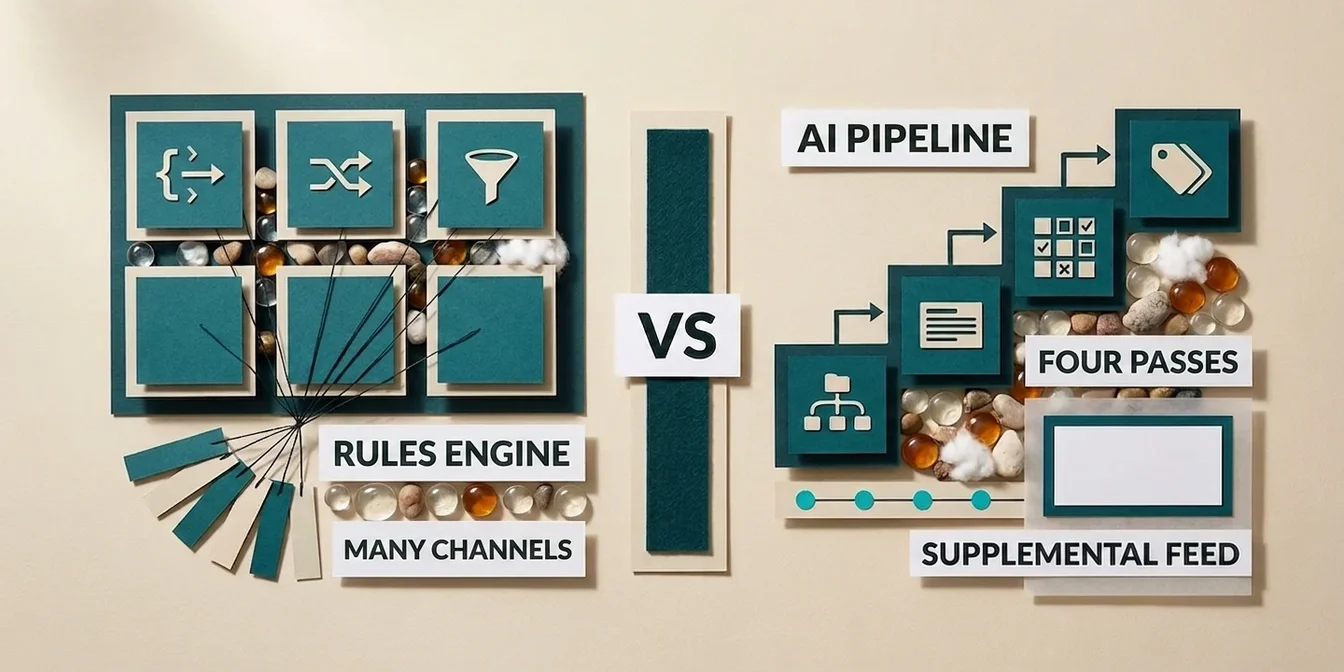
Feedonomics Surface runs on transformation rules and field mapping, plus AI product categorization. FeedOptimizer.AI replaces the rules entirely with a four-pass AI pipeline that rewrites title, description, and attributes per product. That's the same architecture split you see against Feedonomics' bigger rivals, just at a lower entry price.
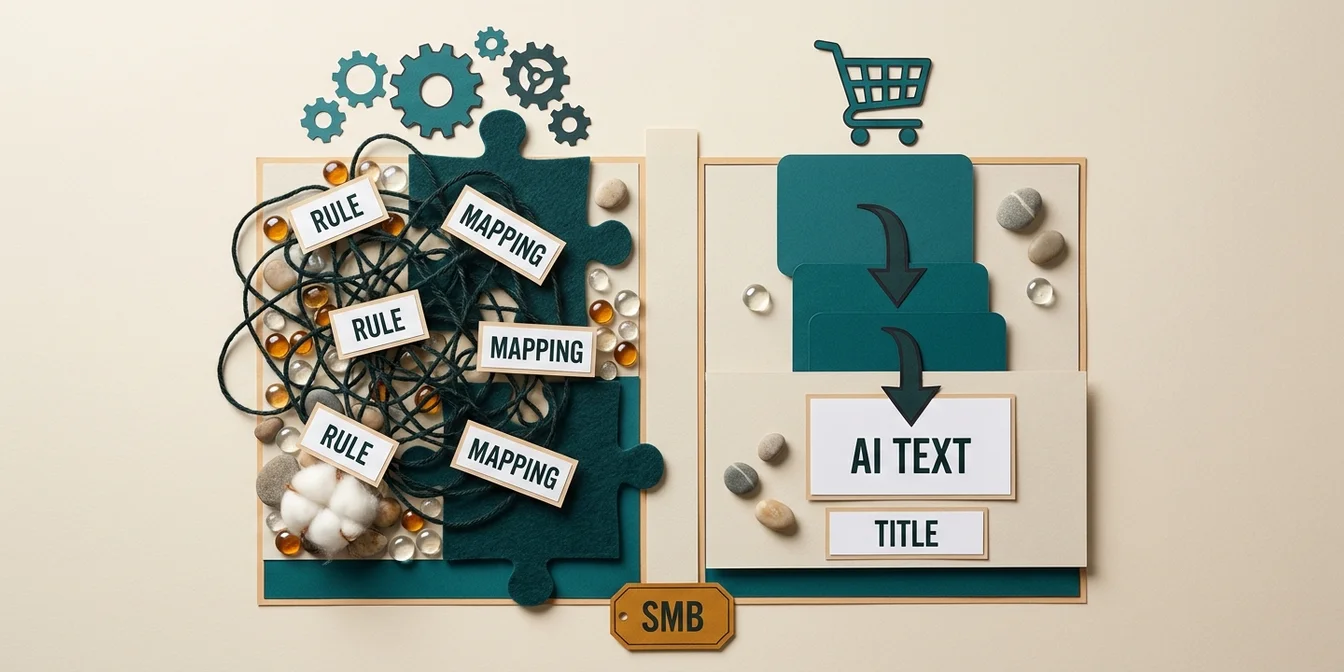
With Surface, you define which fields map where, which external data sources get imported, and which transformation rules apply. The AI categorization sorts products into the right Google product category automatically, but it doesn't rewrite titles or descriptions. Feedonomics does advertise generative AI content, branded as "AI Data Enrichment," for brand-aligned titles and descriptions, but that shows up as an add-on around the managed service, not as a documented part of the Surface tiers.
FeedOptimizer.AI has no mapping interface. One model classifies the product category, a second selects the exact Google product category from a candidate list, a third generates title, description, and highlights, and a fourth refines attributes and structured product details. You review the output in the workbench instead of building a rule first.
A categorization model sorts products correctly. A content model writes the copy that closes the sale. Calling both "AI" blurs the part that actually drives the purchase decision, the title the shopper reads.
Dennis Gerich, Founder & CEO, FeedOptimizer.AI
Pricing math by catalog size
At 500 to 5,000 products on one channel, FeedOptimizer.AI and Feedonomics Surface sit in the same order of magnitude, and Surface can actually come out cheaper, with a different scope of what you're paying for, provided you're on BigCommerce. Once channel count, not catalog depth, becomes the real problem, FeedOptimizer.AI has no offer left.
| Catalog size | FeedOptimizer.AI | Feedonomics |
|---|---|---|
| 800 products, 1 channel (Google Shopping) | $29/month (band up to 1,000) | Surface Retail: $29/month (tier up to 1,000 SKUs, 2 connections) |
| 5,000 products, 1 channel | $89/month (band up to 5,000) | Surface Retail: $49/month (tier up to 10,000 SKUs, 4 connections) |
| 30,000 products, channels like Amazon or Walmart | Not covered (no multi-channel) | Managed service: price on request, unlimited channels |
At 800 products on Google Shopping, FeedOptimizer.AI runs $29/month, and the matching Surface Retail tier costs the same $29, sized for 1,000 SKUs and two channel connections, of which a Google-only setup uses one. At 5,000 products, FeedOptimizer.AI is $89 for the four-pass AI pipeline, while the matching Surface Retail tier (up to 10,000 SKUs, four connections) costs $49, roughly 45% less. Past 5,000 products, Surface Retail is the cheaper option if Google Shopping is your only channel. Once you need a channel FeedOptimizer.AI simply doesn't connect to, like Amazon or Walmart, the Feedonomics managed service with its custom quote is the only option left. If it's just your Google Shopping catalog growing past Surface's 100,000-SKU ceiling, FeedOptimizer.AI also has a custom quote above its top band ($499/month for 100,000 products).
100,000 SKUs is where Feedonomics Surface Basic stops being free, but up to that limit it ships no AI content generation at all. That's the most generous free threshold in this comparison, and it covers feed building, syncing, and categorization only, not the part FeedOptimizer.AI treats as its core product.
Channel breadth vs. channel depth
Through the managed service, Feedonomics covers 2,000+ channels. Surface launches with Google and Meta and adds integrations from there. FeedOptimizer.AI stays at exactly one. For a small business selling exclusively through Google Shopping, channel breadth isn't the thing you're actually shopping for.
A multi-channel tool has to compromise so the same logic works across hundreds of channels with different taxonomies and attribute requirements. A Google-Shopping-only tool can tune every optimization exactly to Google's categories and ranking signals. That focus is what lets FeedOptimizer.AI run a four-pass AI check per product, a platform serving Meta, Amazon, and TikTok at the same time can only match that depth per channel with more rules or more headcount.
So the real question for a small business isn't how many channels a tool connects to. It's how many of those you actually run, and whether Google Shopping is the one carrying most of your ad spend.
Risk model: supplemental feed vs. direct feed transformation
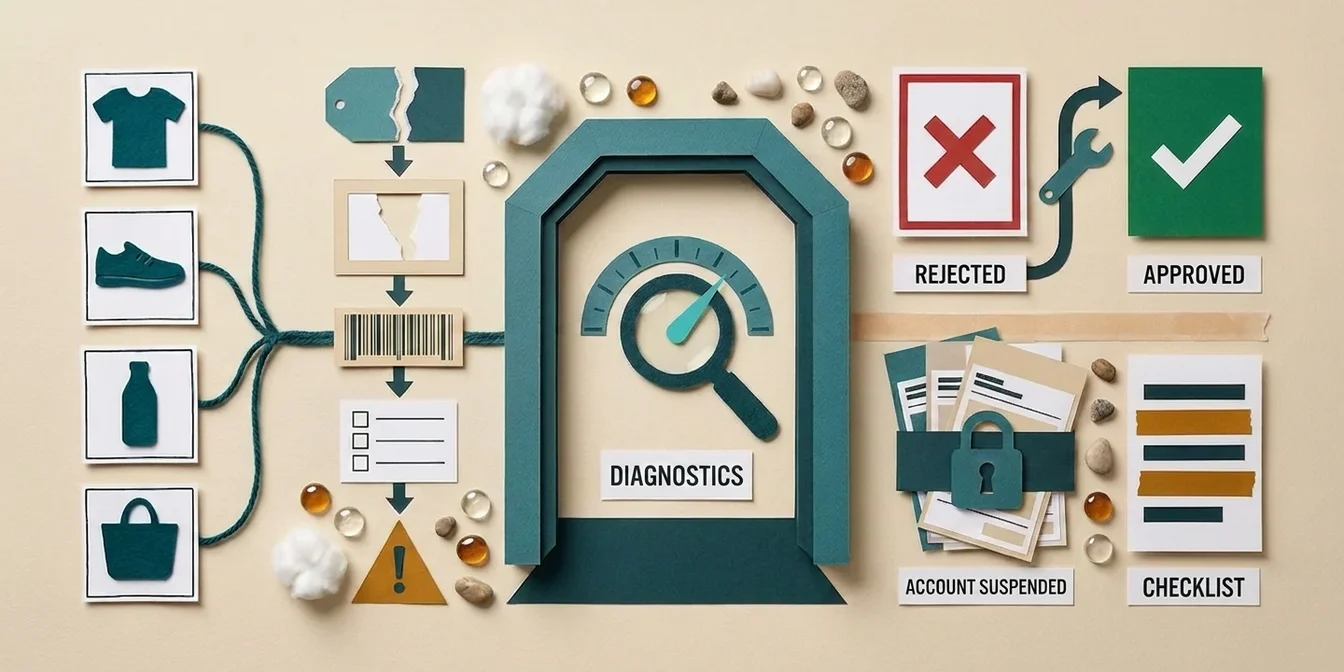
FeedOptimizer.AI uploads optimizations exclusively as a supplemental feed, your original feed in Merchant Center stays untouched. Feedonomics builds the feed that reaches the channel directly, either from your own rules or through the managed-service team. For a small business without a dedicated feed team, that strict separation between original and optimized data is a practical difference on day one.
With Feedonomics Surface, your transformation rules decide directly what reaches the channel. A mistake in a rule shows up in the live feed immediately, and the only defense is careful testing before publishing. With the managed service, the Feedonomics team owns that responsibility, which is part of what you're paying for.
FeedOptimizer.AI's supplemental feed approach keeps the original and the optimization strictly separate: the AI writes to an additional data source that Merchant Center prioritizes, but you can disable at any time without touching the original feed. For a team without dedicated QA capacity, that lowers the barrier to running a first live test.
Migration: when does switching make sense?
Switching to FeedOptimizer.AI mainly pays off for Google-Shopping-focused small businesses currently paying for Feedonomics Surface Retail who really want AI-written content instead of rule maintenance. For multi-channel setups, Feedonomics remains the right choice. A full switch isn't the only option on the table.
Because FeedOptimizer.AI runs through a supplemental feed, a parallel test carries zero risk while Feedonomics Surface or the managed service stays active for other channels. A common path: keep Feedonomics running for Meta or additional marketplaces, and let FeedOptimizer.AI take over the Google Shopping channel on a trial basis with the free 200-product tier before making a call.
Decision table
| Your situation | Recommendation |
|---|---|
| Google Shopping only, small business catalog | FeedOptimizer.AI |
| Multi-channel across Google, Meta, Microsoft Ads, TikTok | Feedonomics (Surface or managed service) |
| You want to control feed rules yourself | Feedonomics Surface |
| You want AI content without rule setup | FeedOptimizer.AI |
| Catalog over 100,000 SKUs or complex channel requirements | Feedonomics managed service |
| Original feed must stay untouched | FeedOptimizer.AI (supplemental feed) |
| No dedicated feed team, and no budget for a managed service either | FeedOptimizer.AI |
| Store runs on Shopify, WooCommerce, or another platform | FeedOptimizer.AI (Surface is BigCommerce-exclusive) |
How FeedOptimizer.AI goes deeper on Google Shopping
FeedOptimizer.AI isn't a replacement for an enterprise managed service spanning hundreds of channels, it's a specialization on the one channel that carries most of the shopping budget for the typical small business.
- Four-pass AI pipeline per product: category classification, Google product category assignment, content generation, attribute refinement, no manual field mapping required
- Supplemental feed: original feed stays untouched, every optimization is reversible
- Quality Score dashboard: instant visibility into which products have optimization potential
- Batch optimization: hundreds to tens of thousands of products in one pass, not field by field
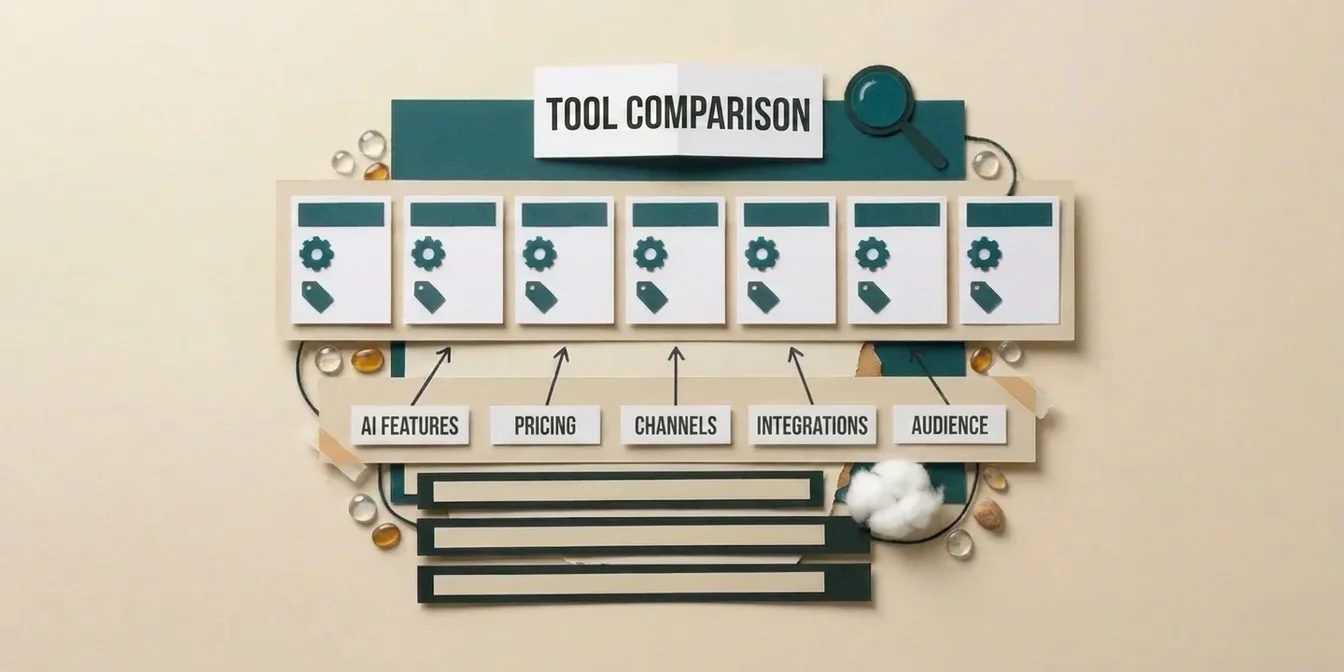
For how the AI pipeline works in detail, see our guide to AI feed optimization. For how Feedonomics stacks up against other tools like DataFeedWatch and Channable, see the Feed Management Tool Comparison 2026. For a direct comparison against another rules engine, see FeedOptimizer.AI vs DataFeedWatch.
Frequently Asked Questions
Is FeedOptimizer.AI cheaper than Feedonomics?
Not automatically: for small, single-channel catalogs, FeedOptimizer.AI and Feedonomics Surface Retail sit in a similar price range, and past roughly 5,000 products Surface Retail can actually be cheaper. The real difference is scope, FeedOptimizer.AI delivers AI-generated content instead of rule maintenance. Once multiple channels enter the picture, FeedOptimizer.AI simply has no offer, and the comparison shifts to the Feedonomics managed service with its custom quote. If it's just a Google-only catalog growing past 100,000 SKUs, FeedOptimizer.AI also offers a custom quote above its top band.
What's the difference between Feedonomics Surface and the Feedonomics managed service?
Surface is a self-serve product with a public price list (free up to 100,000 SKUs, then tiered pricing), where you configure transformation rules and field mapping yourself. The managed service is the enterprise version with a dedicated feed manager and a custom quote, where the Feedonomics team does the work for you.
Does Feedonomics generate AI content like FeedOptimizer.AI?
Feedonomics advertises "AI Data Enrichment" for titles and descriptions, but that's an add-on around the managed service, not a documented part of the Surface tiers. The AI feature Surface actually ships is product categorization, not content generation. FeedOptimizer.AI's entire pipeline is AI-written content from the start.
Can I use Feedonomics and FeedOptimizer.AI at the same time?
Yes. FeedOptimizer.AI runs through a supplemental feed that doesn't touch your existing Merchant Center feed. You can keep Feedonomics active for other channels like Meta or Amazon and test FeedOptimizer.AI in parallel on Google Shopping only.
What size business is Feedonomics built for?
The managed service is structurally built for enterprise and larger mid-market catalogs, with a dedicated feed manager and custom pricing. Surface targets smaller D2C and B2B merchants, but it's still a rules-engine tool, not an AI content generator, and it's currently exclusive to BigCommerce stores.
Bottom line: the comparison runs against Feedonomics Surface, not the managed service
Feedonomics and FeedOptimizer.AI solve different problems, but Feedonomics' lineup now has a tier that actually matters for small business. The key takeaways:
- Feedonomics is two products: Surface for self-serve with a public price, managed service for enterprise complexity with a custom quote. A small-business comparison has to separate the two.
- Architecture is still the core difference: Surface is a rules engine with categorization AI, FeedOptimizer.AI is a complete AI content pipeline.
- Pricing is comparable at small, single-channel catalog sizes, and Surface Retail can even be cheaper, but FeedOptimizer.AI has no offer once you need multiple channels; for a Google-only catalog past 100,000 SKUs, it offers a custom quote just like Feedonomics.
- The supplemental feed approach makes a parallel test risk-free, regardless of which Feedonomics product you're running otherwise.
If Google Shopping is your main channel, on your first 200 products, no credit card, alongside your existing setup.